omnisearch_title
Persistency Over Striving: Five Simple Somatic Practices to Reconnect with Your Body, One Millimeter at a Time
Most people are looking for and longing for mental balance, without understanding that the body is the easiest way to reach it. By learning how the physical body can influence and stabilize the mental and cognitive one, we free ourselves from suffering, unsettledness, and imbalance.
The key of transformation is in one word: persistency. What I love about Somatic Experiencing is the concept of “commit without pushing” and that results come from continuity, not from efforting. Exactly the opposite of what we used to hear in the past: “no pain no gain”!
I want you to think about the compound effect, it works in a very simple way. The things that are easy to do are also easy not to do, especially because you do not see results immediately. This is why most people stop. One day of practice does not change much, and even a week might not feel like a big difference.
Think about doing abdominal exercises. Doing a few sit-ups once will not change your body. Even doing them for a couple of days might feel useless. But if you do them every day, consistently, over time the difference becomes undeniable. Strength builds, posture changes, and your body responds.
The same principle applies to somatic practices. Small, simple actions done every day create a cumulative effect. Persistency, not intensity, is what creates real and lasting change.
If you are ready to commit without pushing and you want to build long lasting change to teach your nervous system how to self-regulate, relax and letting go, I am happy to share with you very simple practices to do at home, in the comfort of your own space.
The first one, that I really love, is the UNWINDING:
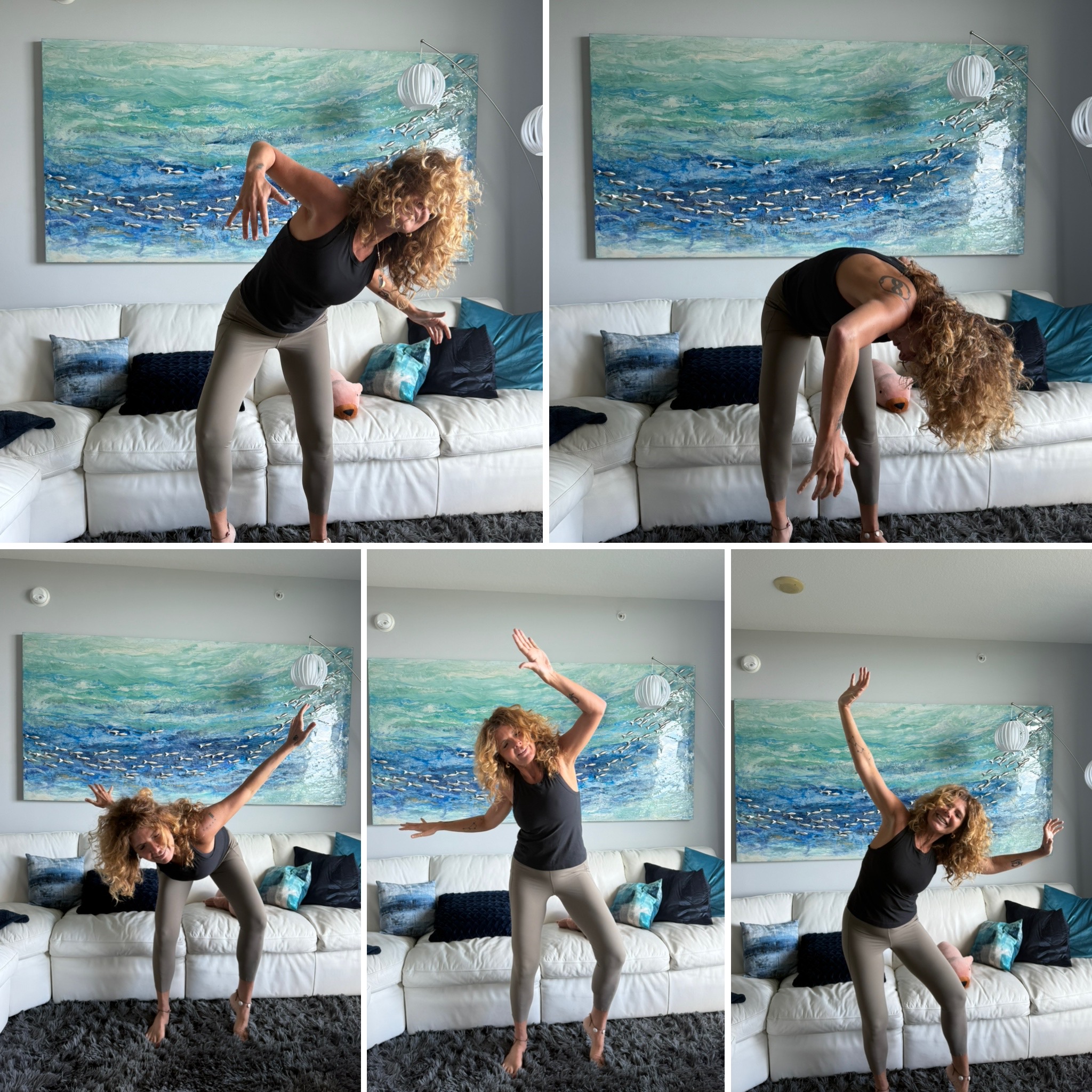
We practice unwinding starting from a standing position. We begin by grounding ourselves, with a very slow, soft piece of music playing in the background. We bring attention to the breath, not controlling it, but simply remembering to breathe. We imagine ourselves like a cat, so it becomes a blend of dynamic stretching and a dance. The key is to let the body lead, allowing it to move toward areas of tension or where there is less space. We follow the body’s natural flow and release.
From there, we can move to positions on the floor or sitting down: the key is never to lock the limbs, but to keep them free. It is important not to hold static yoga poses or static stretches. It works because you are working with the fascia, hydrating it and bringing it back to vitality and elasticity. You reconnect deeply with your body.
Do it in the morning for at least 5-10’ and you set your day differently!
The second one is (YES, of course!) CONSCIOUS BREATH 4-4-6-2
Like box breathing, it is easy to remember and easy to use.
Sit or stand comfortably. Let your shoulders drop and your jaw soften.
4-Inhale through your nose for a count of four.
4-Pause gently for a count of four.
6-Exhale slowly through your mouth for a count of six.
2-Pause again for a count of two.
Then repeat.
You are not forcing the breath. If the counts feel too long, shorten them. What matters is the rhythm, not precision.
As you breathe, keep a small part of your attention in the body. Feel your feet on the ground. Feel the air moving in and out. If you lose track, simply come back to the next inhale.
Do this for one to three minutes.
This type of breathing supports self-regulation because the longer exhale signals safety to the nervous system. It helps the body settle, the mind slow down, and attention come back inside.
You can use this practice anytime during the day. Before a conversation. After stress. When you feel disconnected. Simple, repeatable, and effective through persistency rather than effort.
Third one, is one of the foundations of Somatic experiencing and I was impressed by the similarity with the old ancient Vipassana meditation: BODY SCAN - tracking the sensations in your body:
Find a quiet place where you can sit comfortably with your back up straight . Let your body be supported and allow your eyes to close or soften. Take a moment to notice that you are here.
Bring your attention to your breath for a few natural cycles. You are not changing it. You are simply using it as an anchor to arrive in the body.
Now begin a slow body scan. Start at the top of your head and gradually move your attention downward. You are not trying to relax the body or make sensations change. You are only observing.
As you bring attention to each area, notice what is present. This might be warmth, cold, tingling, pressure, tightness, pulsing, or even numbness. If you do not feel much, that is also a sensation. You simply note it.
Move slowly through the face, neck, shoulders, arms, hands, chest, breasts, belly, back, pelvis, genitals legs, and feet. Take your time. Let attention rest in each area for a few breaths before moving on.
The key practice is tracking physical sensations without judgment. You are not analyzing why a sensation is there, and you are not following thoughts or stories. When the mind wanders, gently bring attention back to direct bodily experience.
If a sensation feels intense, you do not push through it. You stay with it only as long as it feels manageable. If needed, shift attention to another part of the body that feels more neutral or stable, such as the feet or the hands.
Stay with this practice for five to ten minutes. When you are ready to finish, take a moment to feel your whole body at once, sensing the body as a field of sensations.
This practice develops body awareness and self-regulation by training attention to stay with what is physically present. Like Vipassana meditation, the transformation happens through observation and continuity, not through effort or control.
It is an incredible practice to use when you have sleep issues. Instead of counting the hours, simply lie down and do the body scan. In this way, the body rests and the mind rests too, and even if you do not sleep, you wake up feeling rested.
The fourth practice is one we also use in our Somatic Experiencing sessions: GROUNDING.
As the word suggests, it supports you in coming into the here and now, rooted in your body and in the present moment.
You can stand or sit, barefoot, with your eyes gently closed. Begin to feel your connection with the ground, imagining strong, slow roots growing from your feet down into the earth, and imagining that you can breathe through them. They anchor you.
Your legs are slightly bent; your whole body is aligned and upright. Your pelvis is strong and at the same time relaxed, and you allow your breath to flow from the ground all the way to the top of your head. The breath is slow, long, and deep.
When you feel fully in your body and present in the moment, gently open your eyes, notice the difference between the two experiences, and stay grounded, owning the sense of grounding with your eyes open.
The fifth practice is the GRAUNDED GAZE RELEASE:
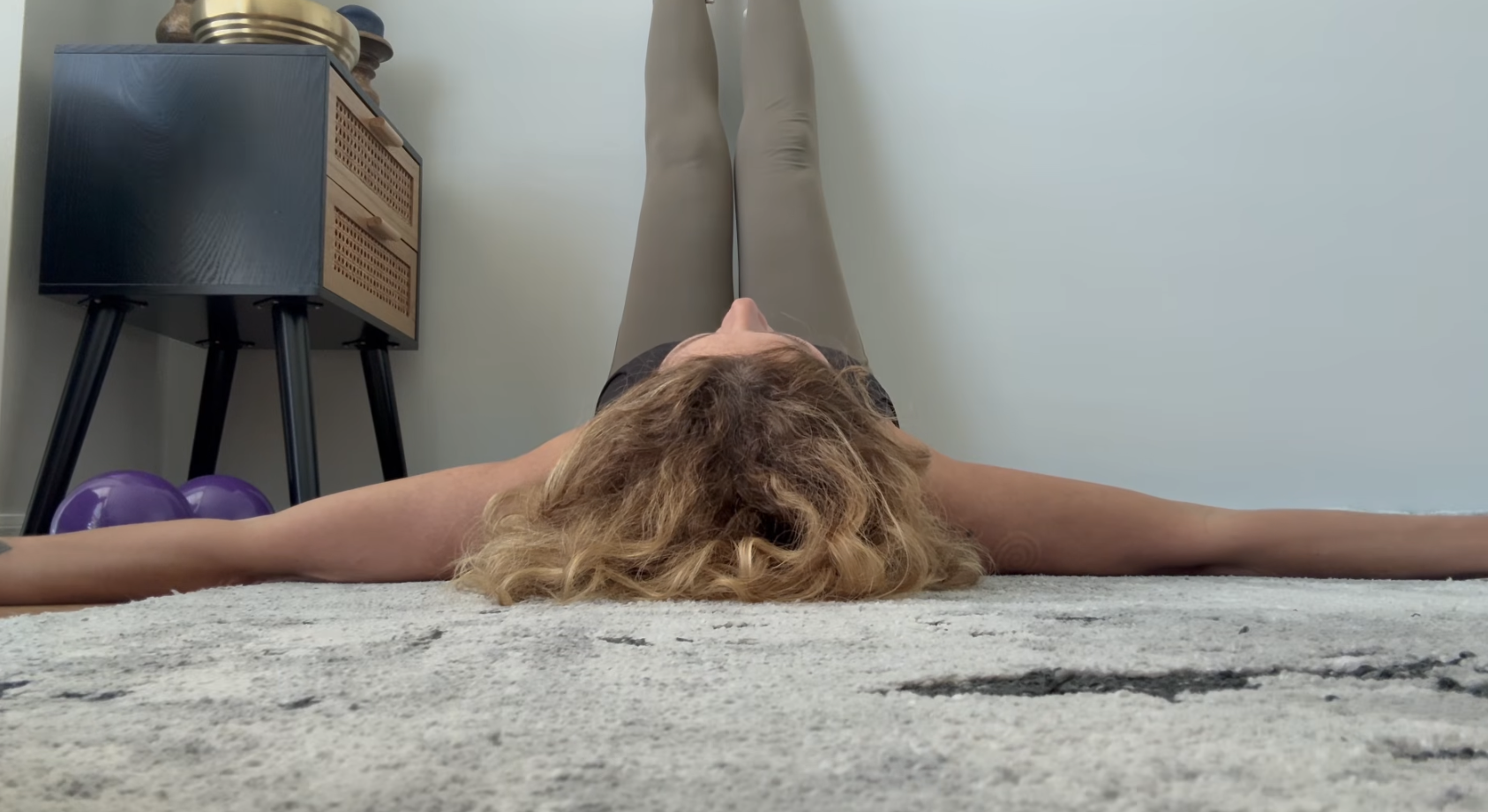
Lie on your back with your legs at a 90-degree angle against the wall and your arms open out to the sides. Turn your head to the left while looking to the right with your eyes and hold this position for three minutes. Then switch sides.
The movement and position of the eyes can influence the autonomic nervous system. By shifting the gaze in a specific direction, we engage cranial nerves and areas of the brain linked to relaxation. Engaging the oculomotor system in this way can help calm the Vagus nerve, which supports the body in shifting into a more relaxed, parasympathetic state. So, by combining this eye position with the posture, we help the nervous system unwind and reset.
Who are these practices for?
They are for everyone. They are very safe and simple practices that can be used daily if you feel disconnected from your body or if you notice that your mind is overriding your life. They are also useful during challenging times, when stress and tension start to take over and you want to calm your nervous system and come back to yourself.
These practices do not require special skills or previous experience. They are designed to be accessible, supportive, and easy to integrate into everyday life, helping you reconnect with your body and restore a sense of presence and regulation.